
Garden Projects and Activity
The LVA has been responsible for the design and maintenance of the Gardens for more than 40 years. A large part of the funding for this has come from the successful Spring Fair. A revitalised effort was commenced in 2018, and set out below are some of the projects that the GoLlies have undertaken, helping to create what is seen today.
The Year in Review 2022
- The Association spent $6451 in funding the Gardeners of Leura (GoLlies) to maintain the public gardens, plus indirect costs of insurance for the volunteers
- a total 240 volunteer hours were recorded by 10 volunteers
- 118 hours of paid gardening was completed
- At least another 100 unrecorded hours were spent in procuring plants and product, drafting of the BMCC Cooperation Agreement and Association Charter, web site and social media postings, managing flags and banners and the creation of signage.
- 521 new plants were planted including 167 perennials
- 4 cubic metres of mulch was spread in June for winter
- The area called Compost Corner was cleared, two bays built and brought into service in June 2022
- The GoLlies also served in the Village Fair and Christmas in the Mall
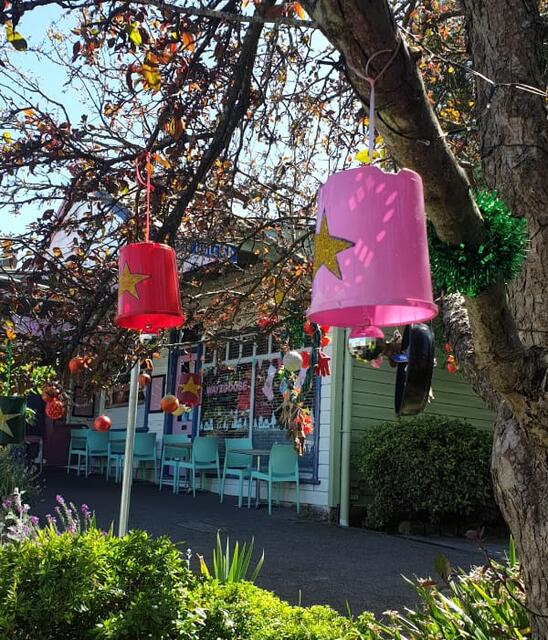
- Continuing on the tradition started last year, the GoLlies decorated their own Christmas tree in the Mall, with a gardening theme.
The GoLlies also acknowledge and are thankful for the support provided by Fiona and staff at the Red Door for their friendly support and free coffee each week, Tom Colless for the pallets to make the first two compost bins. Other donations include palings for the Compost Corner sign (Mountain Men Fencing), donation of plants, rocks for landscaping, gravel for drainage to mention a few of the items.
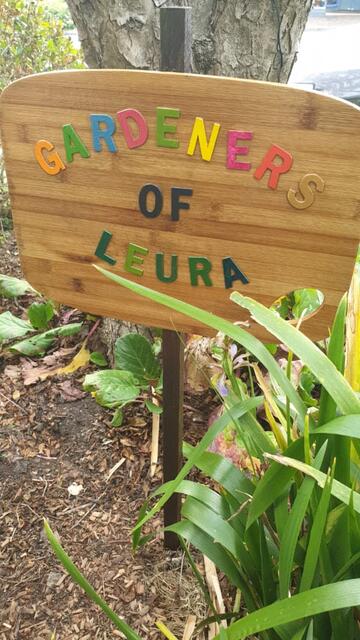
2022 Compost Corner
(This project was reported in the Blue Mountains Gazette)
Embracing the LVA's Waste Strategy, the GoLlies resolved to explore ways of keeping the green waste generated from its work out of landfill, and recycled back to the Gardens as compost. At the same time a local restaurant named Leura Garage was exploring ways to utilise the product from its Zero Waste Food Project. These gave birth to the area that has become known as Compost Corner.
The first problem was to find a place large enough to create a work area and locate some compost bins. Many areas were explored until a space, hidden in a wilderness of ivy, blackberries and neglect, was identified on public land in April. Undaunted by the clearing ahead, the GoLlies added this space to its maintenance portfolio, and starting on April 21st several weeks were spent preparing the site, by weed removal and levelling.
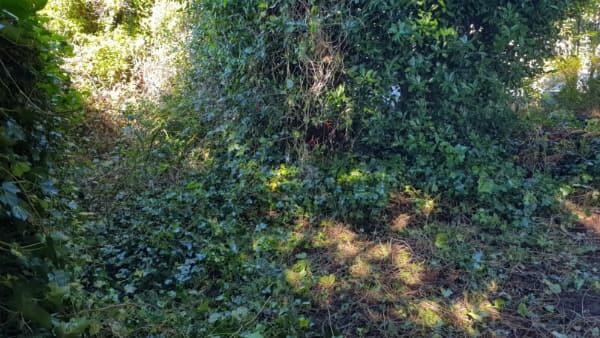
Its a jungle
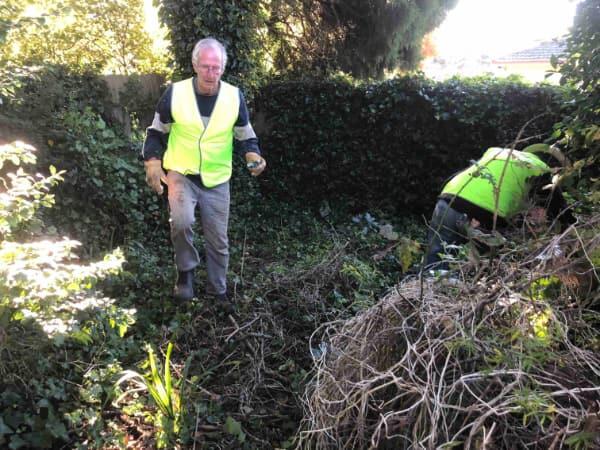
A big job underway
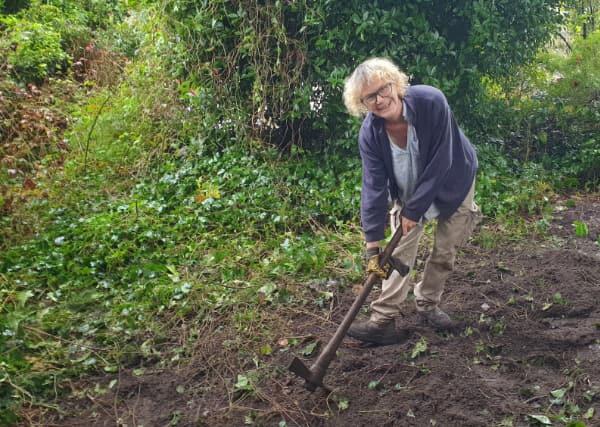
Making progress
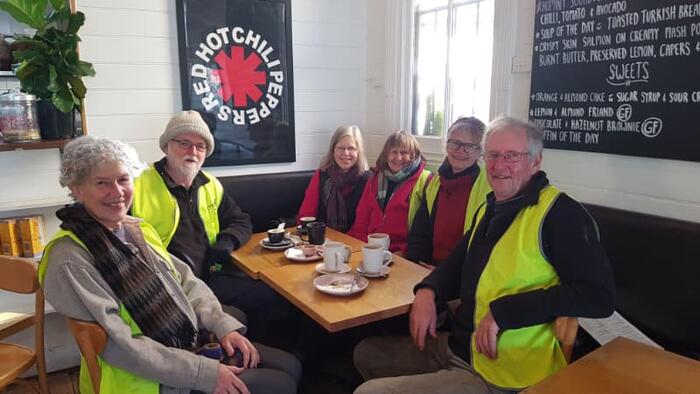
During this time, and while enjoying their after work coffee, another source of "waste" was identified, namely used coffee grounds. Since the beginning of the GoLlies in 2018, the Red Door Cafe has generously hosted the volunteers with a free coffee in appreciation of the work being done. It was an obvious synergy, the waste coffee grounds from the Red Door could be used as material for the compost heaps, and solving one waste problem for them. This also added another dimension to the experiment, how to include other businesses.
The next challenge was to build the compost bins themselves. Many ideas were tossed around for bin construction, and from this emerged the use of recycled pallets. Six were donated by Colless Foods, and research confirmed that these were made of untreated timber, and so ideal. Calling upon the building "skills" of its team, a plan evolved, and the first bin was completed on June 2nd. It was determined to be effective and "rustic", but perhaps a little short of master builder quality.
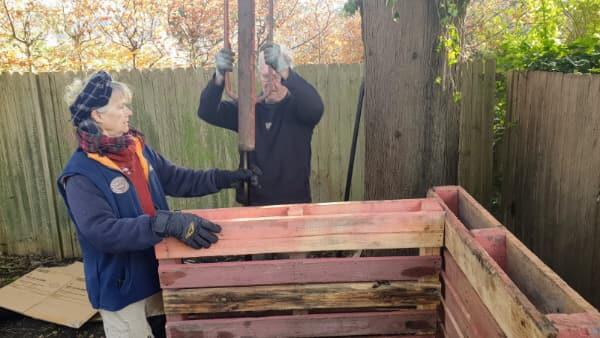
Watch those fingers
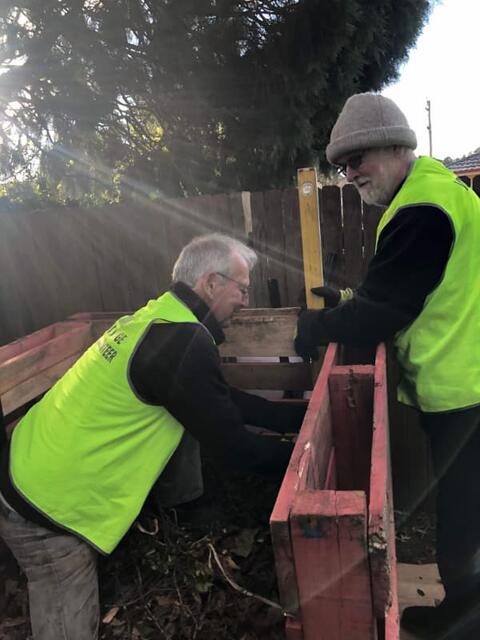
Precision building
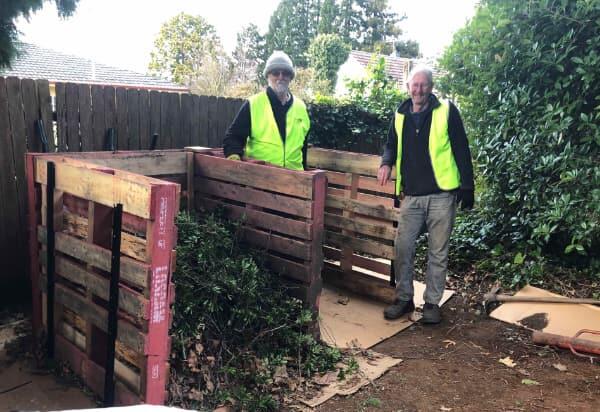
Second bin added
It was commissioned on the same day, when the first offerings were made of autumn leaves, food waste product from the Leura Garage and coffee grounds from the Red Door.
As more garden waste was added with the other product, the second bin was commissioned. What emerged was that one bin was a working bin to take new material, and the other a maturing bin to hold material that is further down the path. How to differentiate? As B1 and B2 (bin 1 and bin 2) had already been used on a popular children's TV show, we had to accept C1 and C2 (compost 1 and compost 2) as a compromise.
Even at this early stage when garden waste, was relatively light compared to the autumn leaves and post spring pruning, it was apparent that we needed to increase scale. While we were able to accommodate the closed food product each week, the production of coffee grounds was more than we needed to keep the compost mixture in balance. The need for C3 was obvious, and a supplementary way of disposing of excess grounds. For the moment the team themselves used these grounds personally.
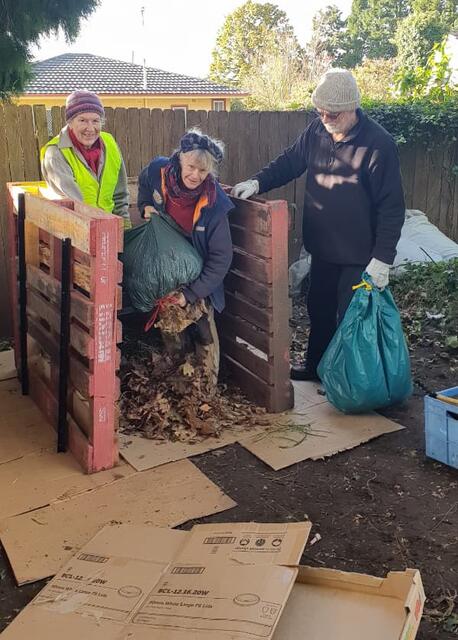
First material added
This experiment is proving very useful to guide the next steps as the LVA contemplates its Waste Strategy.
The achievements so far are:
- All garden waste generated by the GoLlies is now recycled back to the gardens and kept out of the BMCC's green waste program.
- The closed loop product is now kept within the village
- Some coffee grounds are kept within the village
- Reduced emissions from vehicles that previously transported all of this material away from the village.
- Maintaining another part of the public gardens that were previously overgrown with noxious and other weeds, and a dumping place for rubbish.